story of three little pigs pdf
The Story of the Three Little Pigs: A Comprehensive Guide (PDF Focus)
Exploring digital versions reveals a classic tale, often presented as accessible PDFs for young readers,
with variations in illustration and interactive features.
Numerous online sources offer free downloads, but copyright and device compatibility must be considered when accessing these PDF storybooks.
Origins and Historical Context
The narrative of the Three Little Pigs, while seemingly simple, boasts a rich history predating its modern PDF iterations. Its roots lie deep within European folklore, with variations appearing across diverse cultures for centuries. Early versions weren’t always focused on pigs; often, the protagonists were other vulnerable creatures facing a predatory threat.
Scholars trace elements of the story back to oral traditions, potentially originating in 19th-century England and Germany. These early tellings served as cautionary tales, imparting practical lessons about diligence, planning, and the consequences of laziness. The wolf, a recurring symbol in folklore, represents danger and the harsh realities of life. The story’s evolution reflects societal values, shifting from purely moralistic lessons to narratives emphasizing resourcefulness and cleverness.
The PDF format, a relatively recent development, simply provides a new medium for this enduring tale, allowing for wider accessibility and preservation of these cultural narratives.
Early Versions and Folklore
Before the widespread availability of “The Three Little Pigs” in PDF format, the story existed as a vibrant part of oral tradition. Early iterations weren’t standardized; regional variations flourished, featuring different animals and antagonists. Some versions replaced the pigs with other vulnerable creatures, while the wolf wasn’t always the predator – sometimes it was an ogre or a fox.
Notably, these early tales often lacked the detailed character development found in modern adaptations. The focus was primarily on the moral lesson: the importance of hard work and foresight. The straw, stick, and brick houses symbolized varying degrees of effort and planning. These narratives served as practical advice, warning against shortcuts and emphasizing the value of perseverance.
The transition to written form, and later to digital PDFs, helped solidify a more consistent narrative, but echoes of these diverse folkloric roots remain visible in different adaptations.
The Evolution of the Story’s Themes
Initially, “The Three Little Pigs” primarily conveyed a straightforward message about diligence and the consequences of laziness. However, as the story evolved, particularly with its adaptation into PDF formats for children, thematic layers became more nuanced. Modern PDFs often emphasize problem-solving skills and resilience in the face of adversity;
The wolf, once a purely menacing figure, sometimes appears with more complex motivations in contemporary versions. Some adaptations explore themes of envy or desperation, prompting discussions about understanding different perspectives. The story’s focus has broadened beyond simply avoiding danger to include strategies for overcoming challenges.
Digital PDFs allow for interactive elements that reinforce these evolving themes, such as quizzes or activities that encourage critical thinking. The story’s enduring popularity demonstrates its adaptability and continued relevance across generations.
Analyzing the PDF Format of “The Three Little Pigs”
PDF versions offer accessibility features, varying image quality, and potential interactive elements, enhancing the reading experience for children and educators alike.
PDF Accessibility Features for Children
Digital “Three Little Pigs” PDFs increasingly prioritize accessibility for young readers. Tagged PDFs allow screen readers to navigate the text logically, benefiting visually impaired children. Alternative text descriptions for images are crucial, conveying visual information to those using assistive technologies.
Font size and style options within the PDF viewer enable customization for readability. Reflowable text ensures content adapts to different screen sizes, vital for tablets and phones. Interactive elements, like read-aloud features and highlighted text, further enhance engagement.
Well-structured PDFs with clear headings and lists improve comprehension. Color contrast considerations are essential for children with visual sensitivities. PDF creators should adhere to accessibility standards (like WCAG) to ensure inclusivity, making the beloved story available to all children, regardless of their abilities. Proper implementation of these features transforms a simple storybook into a truly accessible learning tool.
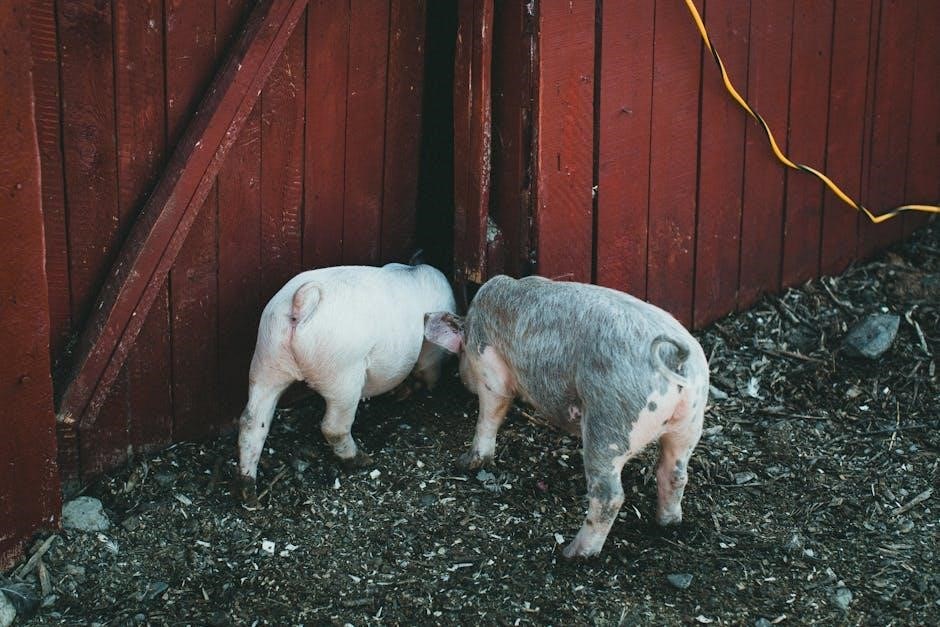
Image Quality and Illustration Styles in PDF Versions
PDF versions of “The Three Little Pigs” showcase a diverse range of illustration styles, impacting the reading experience. Early PDFs often feature simpler, traditionally drawn images, while newer versions boast vibrant, digitally rendered artwork. Image resolution varies significantly; high-resolution images ensure clarity on tablets and computers, but increase file size.
Common styles include cartoonish depictions, watercolor illustrations, and realistic portrayals of the pigs and wolf. Some PDFs incorporate 3D-rendered images for a modern aesthetic. The quality of image compression affects visual fidelity; excessive compression can lead to pixelation.
Illustrations often emphasize key story moments – building the houses, the wolf’s attempts to blow them down, and the pigs’ ultimate safety. PDFs designed for younger children typically employ brighter colors and simpler designs. Choosing a PDF with appropriate image quality and a captivating style enhances engagement and comprehension.
Interactive Elements in Digital PDF Storybooks
Digital PDF storybooks of “The Three Little Pigs” increasingly incorporate interactive elements to enhance engagement. These features move beyond static text and images, offering a dynamic reading experience. Common additions include clickable objects that trigger sounds – the wolf’s huffing and puffing, or the pigs’ squeals.
Some PDFs feature animated sequences, bringing key scenes to life. Interactive quizzes test comprehension, while “find the hidden object” games reinforce visual attention. Pop-up elements reveal additional information or illustrations when tapped. Hyperlinks might connect to vocabulary definitions or related stories.
More advanced PDFs include fillable activities, like coloring pages or simple puzzles. These interactive components cater to different learning styles and promote active participation; The presence of these features transforms the PDF from a passive reading material into an immersive educational tool, particularly beneficial for early learners.
Educational Applications of the “Three Little Pigs” PDF
PDF versions facilitate vocabulary building, moral lessons, and early literacy skills through engaging storytelling. They offer accessible learning tools for educators and parents alike.
Vocabulary Building and Language Development
The “Three Little Pigs” PDF serves as an excellent resource for expanding a child’s vocabulary and fostering language development. Simple yet repetitive language patterns within the story reinforce comprehension and aid in word recognition. Key vocabulary, such as “straw,” “sticks,” “bricks,” “wolf,” and descriptive adjectives like “strong” and “weak,” are repeatedly used, solidifying their meaning for young learners.
PDF formats often allow for interactive features, like highlighting key words or providing definitions, further enhancing the learning experience. Parents and educators can utilize the story to introduce concepts like rhyming and sentence structure. Furthermore, discussing the story encourages children to articulate their thoughts and feelings, improving their expressive language skills. The narrative structure also provides opportunities to practice sequencing events and retelling the story in their own words, boosting narrative abilities.
Digital PDFs can incorporate audio narration, allowing children to hear correct pronunciation and intonation, crucial for language acquisition. This multi-sensory approach – reading, seeing, and hearing – maximizes learning potential and makes vocabulary acquisition more engaging and effective.
Moral Lessons and Character Education
The “Three Little Pigs” PDF beautifully illustrates the importance of hard work, perseverance, and planning. The story clearly demonstrates that shortcuts and laziness – represented by the first two pigs – lead to failure, while diligence and foresight – embodied by the third pig – result in success and security. This provides a valuable lesson for children about the benefits of responsible behavior.
PDF versions can facilitate discussions about character traits. Educators and parents can ask children to identify the strengths and weaknesses of each pig, fostering critical thinking and empathy. The wolf’s character, though villainous, can also be a starting point for conversations about overcoming challenges and making positive choices.
Moreover, the story subtly teaches the value of preparation and risk assessment. The third pig’s sturdy brick house symbolizes the importance of building a strong foundation for the future. Digital PDFs, with interactive elements, can reinforce these moral lessons through quizzes or reflective prompts, solidifying their impact on young minds.
Using the Story for Early Literacy Skills
“The Three Little Pigs” PDF serves as an excellent tool for developing early literacy skills in children. Its repetitive phrases and predictable structure aid in phonological awareness and reading comprehension. PDF formats allow for highlighting key vocabulary – like “straw,” “sticks,” and “bricks” – reinforcing word recognition.
Interactive PDFs can incorporate features like read-aloud options, enhancing pronunciation and fluency. The story’s simple narrative structure is ideal for practicing sequencing skills; children can retell the story in their own words, improving narrative abilities. Furthermore, PDFs often include vibrant illustrations that support visual literacy and comprehension.
Teachers and parents can utilize the story to introduce basic story elements – characters, setting, plot, and resolution. PDFs can be paired with writing prompts, encouraging children to create their own variations or write about their favorite part, fostering creativity and written expression.
Finding and Downloading “The Three Little Pigs” PDFs
Numerous websites offer free “Three Little Pigs” PDFs, but verifying source reputation is crucial. Always consider copyright restrictions and ensure compatibility with your devices for optimal reading.
Reputable Sources for Free PDF Downloads
Locating trustworthy sources for free “Three Little Pigs” PDFs requires careful consideration. Many educational websites and online libraries provide legally accessible versions of this beloved tale. For instance, sites dedicated to children’s literature often host free downloadable PDFs, ensuring copyright compliance and offering age-appropriate content.
Project Gutenberg is a valuable resource, offering classic children’s stories in various digital formats, including PDF. Similarly, International Children’s Digital Library (ICDL) provides a curated collection of books from around the world, with many available as free PDFs. Additionally, some publishers offer sample PDFs or promotional versions of their “Three Little Pigs” books.
Always prioritize websites with clear copyright information and a commitment to legal distribution. Avoid downloading PDFs from untrustworthy sources, as they may contain malware or violate copyright laws. Checking for secure website connections (HTTPS) and reading user reviews can also help ensure a safe and legitimate download experience;
Copyright Considerations and Legal Use
Understanding copyright law is crucial when downloading and using “Three Little Pigs” PDFs. While the original story is in the public domain, specific illustrations, translations, or adaptations may still be protected by copyright. Therefore, downloading PDFs from unauthorized sources constitutes copyright infringement.
Legal use generally includes personal reading or educational purposes within a classroom setting, provided the source is legitimate. However, distributing, modifying, or commercially exploiting copyrighted PDF versions without permission is prohibited. Always check the licensing terms associated with each PDF before use.
Reputable sources, as previously mentioned, typically offer PDFs with clear usage rights. Respecting copyright protects the rights of authors and illustrators, ensuring continued creation of quality children’s literature. Downloading from official channels supports the publishing industry and promotes ethical digital practices. Ignoring these considerations can lead to legal repercussions.
PDF Compatibility Across Devices (Tablets, Computers, Phones)
PDF format generally offers excellent cross-device compatibility, making “Three Little Pigs” PDFs accessible on tablets, computers, and smartphones. However, rendering quality can vary depending on the device and PDF reader application. Most modern devices have built-in PDF viewers, like Apple’s Books app or Adobe Acrobat Reader.
Tablets, with their larger screens, provide an optimal reading experience, especially for illustrated versions. Computers offer the most consistent display, while smartphones require zooming and scrolling. Interactive PDFs with embedded audio or animations may function differently across platforms.
Ensure your device has a current PDF reader installed for best results. Some PDFs may be optimized for specific screen sizes, potentially causing layout issues on others. Testing the PDF on your intended device before sharing it with children is recommended. Accessibility features, like text resizing, also depend on the PDF reader’s capabilities.
Variations and Adaptations in PDF Formats
PDF versions showcase diverse adaptations, including bilingual editions, animated storybooks, and those featuring audio narration for enhanced engagement and learning experiences.
These formats cater to varied learning styles and language needs, enriching the classic tale.
Bilingual PDF Versions (English & Other Languages)
The availability of bilingual PDF versions of “The Three Little Pigs” significantly expands the story’s reach and educational value. These PDFs typically present the English text alongside its translation in another language, often displayed side-by-side or with interactive toggling features. This format is incredibly beneficial for language learners, allowing them to compare and contrast vocabulary and sentence structures directly.
Common language pairings include English-Spanish, English-French, and English-Chinese, reflecting the global popularity of the tale and the needs of diverse communities. These resources are particularly valuable for educators working with multilingual classrooms, facilitating inclusive learning environments. The dual-language presentation aids comprehension and encourages language acquisition in a natural, contextualized manner.
Furthermore, bilingual PDFs can support heritage language learners in maintaining and strengthening their connection to their family’s language. The familiar narrative of “The Three Little Pigs” provides a comfortable and engaging framework for language practice, making the learning process more enjoyable and effective. Finding these resources often involves searching educational websites or online bookstores specializing in bilingual materials.
Animated PDF Storybooks
A fascinating evolution of the “Three Little Pigs” PDF is the emergence of animated versions, moving beyond static illustrations to incorporate subtle motion and interactive elements. These aren’t full-fledged animations like video files, but rather PDFs enhanced with embedded animations triggered by clicks or page turns. This creates a more engaging reading experience, particularly for younger children.
These animated PDFs often feature simple animations – a twinkling star, a swaying tree, or the wolf’s eyes following the reader – designed to capture attention and enhance comprehension. The animations are typically created using Adobe Acrobat’s multimedia features or similar PDF editing tools. While file sizes are larger than standard PDFs, the added interactivity offers a significant benefit.
Finding these animated versions requires specific searches, as they aren’t as common as static PDFs. Educational websites and platforms specializing in digital storybooks are the most likely sources. The integration of animation transforms the traditional PDF into a dynamic and captivating learning tool, fostering a love of reading and storytelling.
PDFs with Audio Narration
Enhancing accessibility and engagement, PDFs of “The Three Little Pigs” increasingly feature integrated audio narration. These versions cater to diverse learning styles and provide support for emergent readers, allowing children to follow along with the story while listening to a professional reading. The audio is typically embedded directly within the PDF file, playing automatically or triggered by clicking specific elements.
The narration can range from simple read-alouds to more elaborate productions with sound effects and character voices, further immersing the listener in the story. This feature is particularly beneficial for children with reading difficulties or those learning English as a second language. Several platforms offer these narrated PDFs, often as part of larger digital literacy packages.
When selecting a PDF with audio, consider the quality of the narration and the clarity of the sound. Look for options that allow pausing, rewinding, and adjusting the volume. These audio-enhanced PDFs transform the reading experience, making “The Three Little Pigs” accessible and enjoyable for a wider audience.